|
|
|
|
 
 |
| (Matdesign24/Getty Images) |
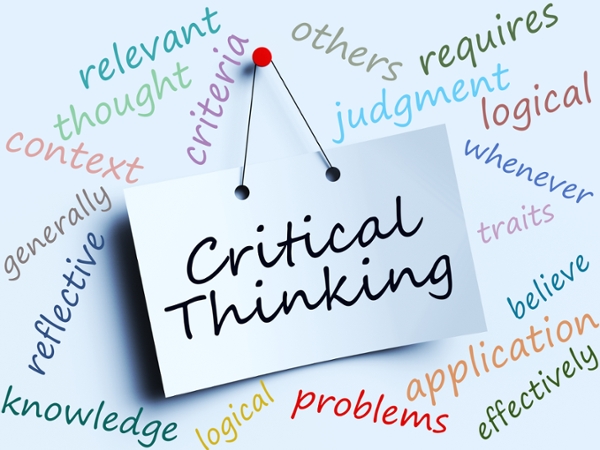
Schools are increasing their emphasis on critical thinking as a key skill as AI proliferates, but students need content knowledge to draw on before they can recognize inaccuracies and think more deeply about a subject, experts say. De-emphasizing factual knowledge in favor of abstract skills could leave students ill-prepared to assess information and solve problems, especially when using AI tools that require informed prompting and evaluation.
|
|
|
|
|
Educators get frustrated when a PLC struggles with weak goals, incomplete data, irregular monitoring and group disparity. A high-efficiency PLC that uses reliable data can create meaningful improvement. Read this SmartFocus to create a productive PLC. |
|
|
|
| ADVERTISEMENT |  |
|

Teachers and students have told us exactly what they need. The first step does not require a perfect plan, but rather a decision to start. -- Eva Harvell, Ed.D., technology director, Pascagoula-Gautier School District, MississippiMore than half of core subject teachers and 54% of students are using AI for schoolwork, up significantly in the last two years, according to a Rand report, and 54% of teachers say professional development is crucial for using AI. But only 45% of principals have policies on AI use; 34% of teachers say their school addresses AI and academic integrity; and 35% of district leaders say students receive AI training. To close this gap between actual AI use and responsible implementation, Eva Harvell, Ed.D., the technology director for the Pascagoula-Gautier School District in Mississippi, recommends districts step up by establish governance, investing in deep professional development and making student AI literacy a curricular responsibility.
|
|
|
Because "AI is a living reality for many English teachers," as National Council of Teachers of English President Antero Garcia says, NCTE has created a draft framework to help English teachers integrate generative AI into their classes. The framework emphasizes critical thinking, ethical use and understanding AI's limitations, and it includes practical examples for using AI to support writing skills and ethical practices.
|
|
|
|
|
Education is entering a transformative era with AI. Shifting beyond responses, it's redesigning pedagogy and reshaping evaluation. Join the movement challenging conventions by accessing insights. Download the Ebook Now |
|
|
|
| ADVERTISEMENT |  |
|


|
K-12 schools are facing mounting challenges with software-as-a-service solutions, as rising subscription costs, departmental overlap and lack of interoperability create operational headaches. Many districts now juggle dozens of recurring software subscriptions, often with little control over critical systems or insight into total costs. This can lead to financial strain and operational fragmentation, so adjusting the SaaS approach to long-term strategic planning, says Thomas Lawing, Ed.D., the chief operating officer for Fort Bend Independent School District in Texas.
|
|
|
| Rules, Regulations & Budgets |
|
|
Fourth-grade teacher Dylan Elliott asserts that the Los Angeles Unified School District's proposed limitations on screen time for second- through fifth-graders will hinder meaningful digital learning because it fails to differentiate between recreational and educational screen use. In this opinion piece, Elliot urges exceptions for certain ways screens are used, such as enhanced collaboration, research skills and tailored use for instructional needs.
|
|
|
| SmartBreak: Question of the Day |
|
| King Edward VIII abdicated the British throne in 1936. Queen Elizabeth II was formally crowned June 2, 1953, after the death of her father, George VI. What was Edward VIII to Elizabeth II? |
|
|
| Got this from a friend? Subscribe now and stay in the loop! |
|

|
|
|
|
|
|
| Copyright © 2026 SmartBrief. All Rights Reserved. A division of Future US LLC. |
| Full 7th Floor, 130 West 42nd Street, New York, NY, 10036. |
|
|
|
|